The Design Opportunity in Light Switches
Light switches are the most touched hardware in any home and among the most overlooked in design planning. Standard white rocker switches – installed in the vast majority of homes – are functionally adequate and visually negligible in the wrong direction. They do not enhance a wall’s appearance; they interrupt it. Against a painted or wallpapered wall, the standard white switch plate is an assertion of functional necessity that a more considered alternative could express differently.
The design opportunity is not primarily about switch plates – the visible cover plate around the switch – though decorative switch plates are available in many finishes and profiles. The more meaningful opportunity is the switch mechanism itself: replacing standard rocker switches with dimmers, touch-sensitive controls, or smart switches that combine control and dimming with scheduling and remote operation.
The improvement from dimmer installation specifically is among the highest-return electrical updates available. A standard switch gives two options – fully on and fully off. A dimmer gives infinite gradation between those states, which fundamentally changes how a room can be used across different activities and times of day.
Dimmer Installation and LED Compatibility
Modern light switches that include dimmer capability require compatibility with the specific LED fixtures they control. Early LED technology had compatibility issues with standard incandescent dimmers – flickering, buzzing, and limited range were common. Current LED-specific dimmers address these issues, and most current LED fixtures specify compatible dimmer brands or models. Confirming compatibility before purchasing the combination of fixture and dimmer prevents discovering incompatibility after installation.
Single-pole dimmers replace single-pole switches – the standard configuration for a fixture controlled from one switch location. Three-way dimmers control a fixture from two switch locations (top and bottom of stairs, two entrances to the same room) and require both switch locations to be upgraded to three-way dimmer switches for the system to work correctly.
Smart switches – which combine dimming control with Wi-Fi connectivity, scheduling, and remote operation – are available at price points that make them practical for standard residential installation. The installation process is the same as a standard dimmer; the additional capability is in the control options. For rooms where lighting scene automation is useful – bedrooms, living rooms, home theaters – smart switches provide that capability without requiring smart bulbs.
Energy Star certified smart switches confirm that the control electronics meet efficiency standards and that the standby power consumption of the switch itself is within acceptable limits.
Switch Plate Finishing for a Cohesive Look
Matching switch plate finishes to other hardware in the room – door handles, hinges, light fixture finishes – creates the visual coherence that makes a room feel considered in its details. Standard white switch plates in a room with matte black hardware and fixtures are a detail that registered designers change; standard white plates in a room where all other hardware is white are simply appropriate.
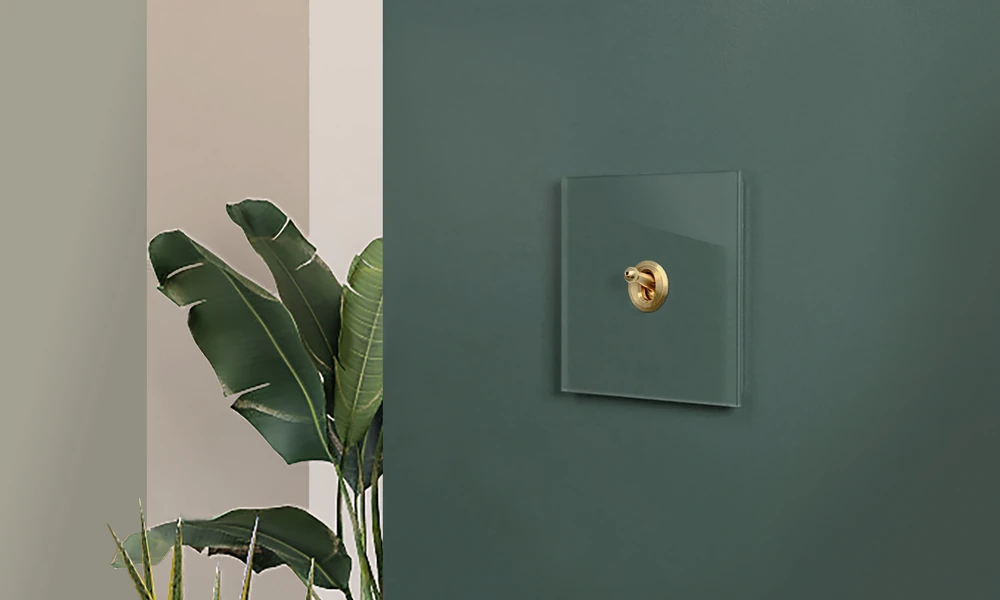
The variety of switch plate materials and profiles available has expanded significantly. Screwless Decora-style plates in brushed nickel, matte black, and polished chrome are widely available; brushed brass and other warm-finish options are increasingly accessible. The incremental cost of a coordinating switch plate over a standard white one is modest; the visual contribution to a room that has been thoughtfully finished is disproportionate to that cost.
The installation of switch plates requires only a screwdriver and is among the most accessible home improvement tasks available. The five minutes required to replace a standard white plate with a coordinating finish plate is among the highest design value per unit of time of any task in home renovation.