
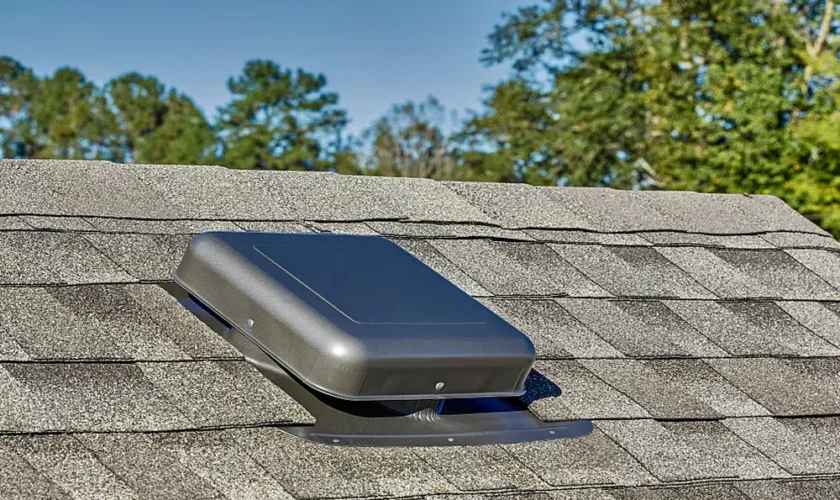
Most homeowners think about a roof as shingles, flashing, and gutters, the parts you can see from the driveway. But a roof is really a system, and one of its most important parts sits out of sight in the attic. Airflow through that space controls heat and moisture, and both of those have a direct effect on how long your roof lasts. A roof with poor ventilation can age years ahead of schedule, even when the shingles are good quality and the installation was done well. Here is what is happening above your ceiling and what you can do about it.
Why the attic matters to the roof
The attic is the buffer between your living space and the outdoors. In summer, the sun heats the roof surface, and that heat passes into the attic. In winter, warm air from the house rises into the same space and carries moisture with it. If that heat and moisture have nowhere to go, they build up under the roof deck.
Over time, trapped heat can bake shingles from underneath, causing them to curl, crack, or lose their protective granules early. Trapped moisture can lead to damp insulation, stained ceilings, mold growth, and rot in the wood framing. None of this shows up quickly, which is why many people only find out when a repair has become a replacement.
Ventilation and insulation work as a team
Good ventilation depends on a simple idea: fresh air enters low, near the eaves, and warm air leaves high, near the ridge. ENERGY STAR explains in its guide to attic ventilation that in summer a well vented attic moves superheated air outdoors, which protects roof shingles and removes moisture. The same guide warns about a very common mistake: insulation pushed into the eaves can block soffit vents and cut off the airflow the attic needs. Rafter vents, sometimes called baffles, keep a clear channel open above the insulation.
This is why adding insulation without thinking about ventilation can backfire. More insulation helps keep conditioned air inside the house, but if it smothers the vents, you trade one problem for another.
Know the signs of a ventilation problem
You do not need to climb onto the roof to spot warning signs. Look for these:
- Shingles that are curling, cracking, or losing granules faster than neighboring homes with similar roofs
- Frost, damp patches, or a musty smell in the attic during cold months
- Ice dams along the eaves after snow, which can force water under shingles
- Rooms below the attic that are hard to cool in summer
- Rusted nails or dark stains on the underside of the roof deck
- Energy bills that keep rising with no change in your habits
Any one of these can have other causes, so treat them as clues rather than a diagnosis.
Get a professional to read the whole roof
Ventilation problems are tricky because they involve airflow, insulation levels, roof design, and the condition of the materials all at once. A contractor such as Quality Roofing & Construction Inc can inspect the roof surface and the attic together, check whether vents are open and balanced, and explain whether you need a minor adjustment or a larger repair. Ask for photos of anything they find, and ask them to point out exactly where the problems are so you can see them for yourself.
A good inspection looks at more than leaks. It covers flashing around chimneys and vents, the condition of the sealant, the state of the gutters, and whether the roof deck feels solid underfoot. Written findings give you something to compare against other quotes and something to refer back to later.
Avoid the common ventilation mistakes
A few errors show up again and again. Mixing different types of vents on the same roof, such as adding a powered fan on top of a ridge vent, can disrupt airflow instead of improving it. Covering soffit vents during a paint job or insulation project cuts off the intake side. Bathroom and kitchen fans that vent into the attic instead of outdoors dump moisture exactly where you least want it.
Another mistake is treating the symptom. Replacing damaged shingles without finding out why they failed means the new ones may fail the same way. Whenever damage shows up, ask what caused it, not just how to patch it.
Build a simple seasonal routine
Roof care does not need to be complicated. In spring and fall, walk around the house and look at the roof from the ground with binoculars if you have them. Check for missing or lifted shingles, sagging lines, and debris in the valleys. Clean the gutters so water can drain freely, and trim branches that rub against or overhang the roof.
Once a year, look into the attic with a flashlight. You are checking for daylight where it should not be, wet insulation, stains, and blocked vents. After any major storm with hail or high winds, look again, since damage is often easier to repair when found early.
Decide between repair and replacement carefully
Not every aging roof needs a full replacement. Isolated damage, a few lifted shingles, or a failed seal around a vent can often be repaired. But widespread curling, repeated leaks, or a roof near the end of its expected lifespan usually points toward replacement. When you compare options, ask what materials are proposed, how ventilation will be handled in the new design, what the warranty covers, and who is responsible if hidden damage turns up once the old layer comes off.
Final thoughts
A roof lasts longest when it is treated as a system that includes the attic. Keep air moving from the eaves to the ridge, keep insulation away from the vents, and keep an eye out for the early signs of heat and moisture damage. Schedule inspections before problems grow, and ask direct questions about ventilation whenever repairs or replacements are on the table. A little attention to what you cannot see from the street can add years to the roof you can.