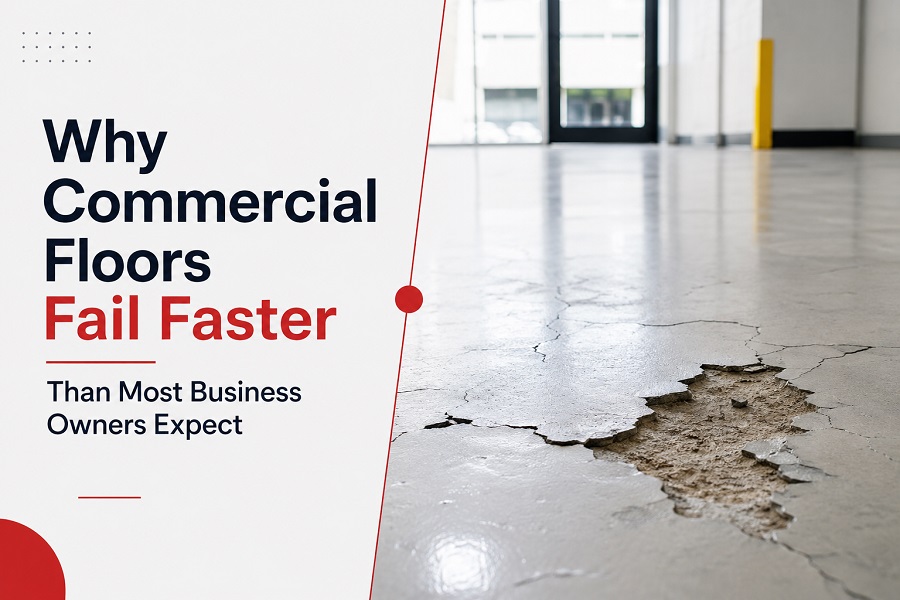
Many commercial floors don’t wear out because the flooring material was poor. They fail because the installation process didn’t match the demands of a busy commercial environment.
In offices, retail stores, restaurants, medical facilities, and other commercial buildings around Tampa, flooring experiences constant foot traffic, rolling equipment, furniture movement, moisture, and daily cleaning. Even a high-quality flooring product can develop problems early if the concrete slab, moisture conditions, or subfloor preparation are overlooked before installation.
Business owners often focus on choosing durable flooring materials while underestimating what happens underneath the finished floor. In reality, the foundation of the installation has a major impact on how well the floor performs over the years.
Why Commercial Flooring Requires a Different Approach
Commercial projects typically involve much heavier daily use than residential homes. That means every stage of installation becomes more important.
Some of the most common reasons commercial flooring develops problems include:
- uneven concrete slabs;
- hidden moisture within the concrete;
- improper surface preparation;
- movement or cracking in the slab;
- incorrect adhesive selection;
- rushed installation schedules.
These issues may not become visible immediately. Instead, businesses often begin noticing loose flooring, hollow sounds, curling edges, cracked tile, lifting vinyl, or premature wear months after installation.
Proper planning before installation helps reduce these risks and protects the investment made in new flooring.
Expert Insight
One pattern experienced flooring contractors frequently see is that flooring failures often begin long before the first tile or plank is installed. Concrete that appears smooth may still contain moisture, surface contaminants, old adhesive residue, or minor elevation changes that eventually affect the finished floor. Spending additional time evaluating the slab at the beginning of the project usually saves significantly more time and money than repairing failed commercial flooring later.
Why Proper Installation Protects Your Business Investment
Every day a commercial floor remains in service, it experiences thousands of small impacts. Employees walk across it, customers move furniture, delivery carts roll through hallways, and cleaning crews use water and commercial cleaning products. Unlike residential flooring, commercial flooring must perform consistently under constant pressure.
That’s why successful commercial flooring projects begin long before installation day. Evaluating the concrete slab, correcting uneven areas, checking moisture levels, and selecting materials appropriate for the environment all contribute to a longer-lasting result.
For example, a medical office requires flooring that supports hygiene and frequent cleaning, while a restaurant may need materials that withstand moisture, grease, and heavy foot traffic. Retail stores often prioritize durability combined with appearance, while office spaces require flooring that remains stable beneath rolling office chairs and everyday employee traffic.
Although every business has different needs, careful preparation remains one of the most important factors behind a successful installation.
What Many Business Owners Overlook
When businesses compare flooring estimates, the lowest price can sometimes exclude critical preparation work. Surface grinding, moisture mitigation, crack repair, floor leveling, or removal of previous flooring systems may not always be included in a basic quote.
Skipping these steps can create hidden problems that appear months later. Replacing damaged commercial flooring often costs considerably more than investing in proper preparation during the original installation.
Choosing experienced professionals who understand commercial flooring systems helps reduce the likelihood of unexpected repairs and business interruptions.
Frequently Asked Questions
How long does commercial flooring typically last?
The lifespan depends on the flooring material, daily traffic, maintenance, and—most importantly—the quality of the original installation and floor preparation.
Is moisture testing important before installation?
Yes. Moisture inside a concrete slab can affect adhesives and many flooring products. Identifying potential moisture issues before installation helps prevent future flooring failures.
Can uneven concrete affect new flooring?
Absolutely. Even small variations in the slab can impact the finished surface, leading to premature wear, movement, cracked tile, or adhesive failure over time.
How to Choose the Right Commercial Flooring System
No single flooring product is ideal for every commercial space. The right solution depends on how the building is used, the level of daily traffic, maintenance expectations, and the condition of the existing concrete slab.
For example, office environments often benefit from flooring systems that provide durability while maintaining a professional appearance for employees and visitors. Retail stores may prioritize surfaces that resist scratches from shopping carts and frequent customer traffic. Restaurants typically require materials that can tolerate moisture, spills, and repeated cleaning without compromising performance. Medical and healthcare facilities often focus on hygienic, easy-to-maintain flooring that supports a clean environment.
Another important consideration is future maintenance. Selecting a flooring system that is easy to repair or maintain can significantly reduce long-term operating costs for business owners. In many cases, spending more time evaluating the building’s conditions before installation leads to fewer service interruptions and greater overall value throughout the life of the floor.
Rather than selecting flooring based solely on appearance or initial cost, experienced contractors evaluate the complete environment before recommending a flooring solution. This approach helps businesses choose materials that not only look professional on opening day but also continue performing well after years of daily use.
Commercial Flooring Is More Than Just Choosing a Material
One of the biggest misconceptions about commercial flooring is that success depends primarily on the flooring product itself. In reality, every commercial installation is a system where the concrete slab, moisture conditions, surface preparation, installation methods, and flooring material all work together.
Businesses planning renovations often compare products based on appearance or price alone, but long-term performance usually depends on how well the entire installation process is managed. Proper planning helps reduce unnecessary repairs, extend the life of the flooring, and minimize disruptions to daily operations.
Whether the project involves an office, restaurant, retail space, medical facility, or condominium common area, selecting an experienced contractor who understands commercial environments can make a significant difference in the finished result.
As Tampa continues to grow with new businesses, office renovations, and commercial developments, investing in professional installation practices has become increasingly important for companies looking for durable, low-maintenance flooring solutions that perform reliably for years.
Businesses considering new flooring can learn more about commercial flooring installation in Tampa and the installation methods that help create long-lasting commercial floors designed for Florida’s demanding climate and high-traffic environments.
Final Thoughts
Commercial flooring is a long-term investment in the safety, appearance, and functionality of a business. While attractive flooring materials are important, the quality of the installation often determines how well that investment performs for years to come.
Businesses planning renovations or new construction can benefit from working with professionals who understand every stage of the process—from slab evaluation and moisture control to final installation. Learn more about commercial flooring installation in Tampa to better understand the planning and installation methods that help commercial flooring perform reliably in demanding business environments.