When replacing a patio dining table but keeping the chairs, compare them as a working set before choosing a finish. A table can look right and still leave an armchair unable to tuck underneath or a diner awkwardly positioned at the edge. Start with the furniture you are retaining, then test the proposed replacement in the conditions that matter for an ordinary meal.
This approach can make a partial refresh more deliberate. You do not need to replace useful chairs simply because a matching showroom set is easier to imagine. Equally, keeping them should not become an excuse to buy a table that nearly works. The relationship needs to be comfortable and practical, not merely close in colour.
Measure the chair where it actually meets the table
Begin with the chair’s overall dimensions, but pay particular attention to the parts that might meet the table. Arms, the seat position and the chair’s shape can affect how closely it approaches the edge. If cushions are normally used, include them in the discussion rather than measuring an empty frame that nobody sits on.
A table’s stated height does not describe every obstruction underneath it. An apron, support or base can affect clearance even when the top appears high enough. Ask for the relevant dimensions or inspect the actual model. Do not assume that two tables with the same overall height offer the same usable space.
Photographs of the existing chairs can help a retailer understand what you mean, particularly if the arm or back has an unusual shape. Keep the measurements with those images. A picture alone should not be used to calculate clearance, especially when the angle hides the part that needs to fit.
If practical and permitted, ask whether one of your chairs can be compared with a display table. Confirm the arrangement before transporting anything. The purpose is to investigate a fit question, not to assume a store can accommodate every test or that a similar-looking display chair will behave identically.
Try the seated relationship, not only the tucked-away position
A chair fitting beneath the table is only part of the decision. Consider the experience of sitting, approaching the tabletop and moving away again. Different people may find the same arrangement comfortable in different ways, so include the regular users in a practical assessment where possible.
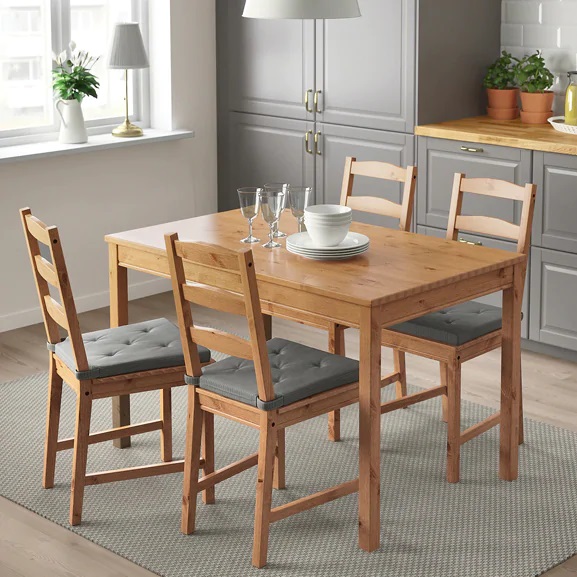
Notice the table base as well as the edge. Legs, braces or a pedestal can affect where feet and knees naturally go. A table described as seating a certain number does not guarantee that your particular chairs will work in every position. Compare the proposed arrangement with the chairs you actually intend to place around it. Include the width of arms when considering neighbouring seats: a generous tabletop can still leave chairs competing for space along one side.
Do not judge only the most spacious seat in the middle of the display. Look at corner or end positions if those will be used. A family may be happy with one arrangement for everyday meals but find that an occasional extra chair creates an awkward position. Understand that compromise before treating the advertised seating count as a promise.
Think about the tabletop’s intended use. Shared serving dishes, ordinary place settings and other items you routinely use take space. You need not create a formal dining display in the showroom; describing a typical meal can reveal whether the proposed table is being chosen for its appearance or for the way your household eats outside.
Let the finishes relate without pretending they match
Once the physical relationship works, consider the materials together. An intentional contrast may be more convincing than a near-match that looks accidental. Bring a reliable photograph or a sample where available, and remember that a screen can change the appearance of colour and texture.
For a Mississauga enquiry, Jameson Pool & Spa’s patio-furniture selection is a category to explore alongside the chairs you plan to keep. Ask about current table options and the dimensions relevant to the retained furniture. Do not assume that a displayed set must be purchased as a complete package or that every item is available separately; confirm the actual offer.
Compare the proposed finish with the chairs and with the surrounding patio, but resist asking one item to match everything. A clear relationship between a few major surfaces can be enough. The table should not need a collection of decorative accessories to disguise a combination you already find uncomfortable.
Read the care information for the new table independently from the instructions for the chairs. Different materials may need different cleaning or storage routines. Do not extend a product or method from the old furniture to the new surface without checking the manufacturer’s guidance.
Decide what remains a useful partial refresh
Before ordering, confirm the exact model, dimensions and configuration discussed. Product ranges may include similar-looking sizes or bases. Keep the quotation clear enough that the item arriving can be checked against the one you evaluated, rather than against a general memory of the display.
Ask about delivery, assembly and the terms that apply if the fit is not as expected. Avoid assuming that an item can be returned after assembly or outdoor use. Understanding those conditions is particularly important when you cannot test your actual chairs beside the proposed table beforehand.
If the retained chairs force too many compromises, pause the purchase rather than settling for a table that almost works. The goal is not to preserve every old piece at any cost or to replace everything for visual consistency. It is to choose a combination that supports an ordinary meal comfortably, with a clear reason for what stays and what changes.