A layer of ash can look harmless, but the smallest particles are easy to breathe in and may linger after smoke has cleared. Before starting wildfire ash cleanup, residents should consider what burned nearby and whether ash may have mixed with materials from damaged buildings. A careful plan helps limit exposure for the person cleaning and for everyone else nearby.
Why ash and soot can contain harmful particles
Wildfire ash and soot may include fine particles from burned vegetation, household materials, and structures. Ash from a burned building can also contain hazardous substances, so it should not be treated as ordinary dirt or handled casually. Avoid touching it with bare hands, and do not shake or sift through it.
How wind and dry cleanup methods spread contamination
Fine ash can become airborne when wind catches it or when it is swept, blown, or vacuumed without suitable filtration. Those particles may settle on nearby surfaces or be breathed in by people who are not doing the cleanup. For a broader overview of ways to limit exposure, see this ash-cleanup guide.
Who should avoid cleanup or take extra precautions
Children should not take part in cleanup or play where ash has settled. People who are pregnant, older, or living with heart or lung conditions should avoid the work or ask someone else to do it; people with asthma or other respiratory concerns may be especially affected. Keeping those at higher risk away from the work area is a practical way to reduce unnecessary exposure.
When to follow local health and air-quality advisories
Check local air-quality and public-health updates before beginning, and postpone outdoor work when conditions are poor or wind is likely to lift ash. Follow local instructions if an area is closed or authorities advise residents to wait. Cleanup can usually be planned around those conditions rather than rushed into a dusty day.
Prepare yourself and the cleanup area
A few minutes of preparation can make the work less dusty and easier to contain. The goal is to keep ash from spreading to clean rooms, people, and nearby drains while allowing the person doing the work to leave contaminated clothing and tools behind. Begin only when the area is safe to enter and the weather is suitable.
Choose protective clothing, gloves, and a properly fitted respirator
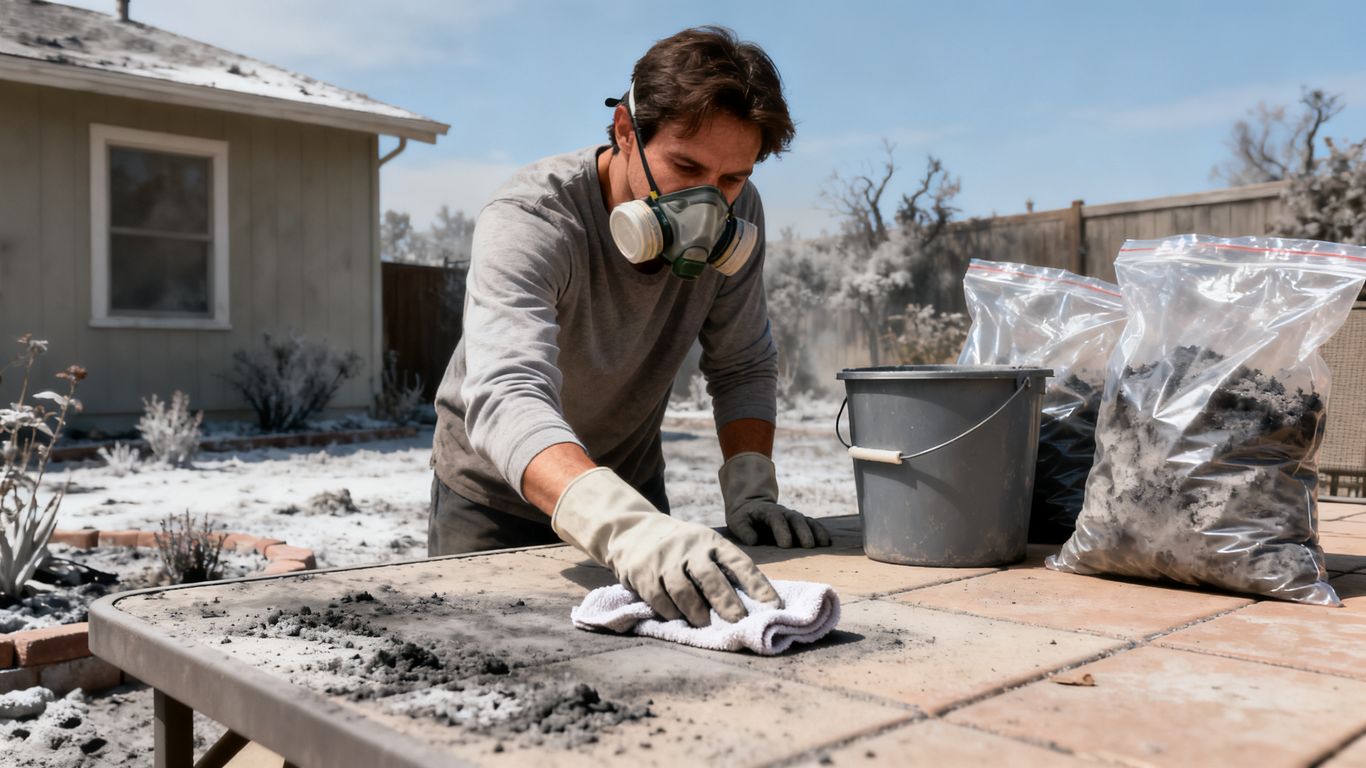
Wear clothing that covers the skin, sturdy closed-toe shoes, and gloves, then use a properly fitted NIOSH-approved N95 respirator or a more protective respirator when appropriate. A cloth face covering is not a substitute for a respirator designed to filter fine particles. A simple set of clothing helps reduce both skin contact and the chance of carrying ash indoors:
- Long sleeves and long pants that can be laundered promptly
- Closed-toe shoes and socks
- Work gloves that can be washed or discarded
- A properly fitted respirator, worn according to its instructions
If the respirator does not fit closely or is difficult to breathe through, stop and reassess rather than continuing unprotected. Protective gear can reduce exposure, but it does not make every cleanup task safe for a homeowner.
Keep children, pets, and people with health conditions away
Set a clear boundary around the cleanup area and keep children and pets out until surfaces have been cleaned and the remaining ash is contained. People with heart or lung conditions, as well as pregnant people and older adults, should avoid handling ash when possible. A separate clean area for breaks and changing out of work clothes can help prevent ash from being carried into the household.
Check weather conditions and dampen ash to limit dust
Choose a calm period when local air quality allows outdoor work. Lightly mist ash before collecting it so it is less likely to become airborne, taking care not to create runoff that carries ash toward drains. If wind picks up or the work becomes visibly dusty, pause and wait for better conditions.
Gather supplies that can be cleaned or safely discarded
Prepare damp cloths, a mop, sturdy bags, clean water, and mild detergent before starting, so trips through clean areas are unnecessary. Use tools that can be washed after the job or discarded safely; do not use equipment that blows ash around. Keeping supplies together also makes it easier to contain used cloths and gloves when the work is finished.
Clean indoor spaces without spreading soot
Indoor cleaning should begin only after outdoor air conditions are suitable for opening windows or doors. Ash can settle on shelves, floors, and other surfaces, then move into the air again if it is disturbed. Work from cleaner areas toward dirtier ones, and use damp methods that capture particles instead of scattering them.
Ventilate only when outdoor air quality allows
Opening windows may help air out a home, but it can also bring outdoor smoke and ash inside. Check local air-quality guidance first and keep windows closed when outdoor conditions are poor. If ventilation is appropriate, avoid creating strong drafts that could blow settled ash through the room.
Use damp wiping and wet mopping on hard surfaces
Wipe hard surfaces with a damp cloth and use wet mopping for floors, rinsing or changing cleaning materials as they become dirty. Do not dry sweep or use a regular vacuum that may send fine particles back into the room. A HEPA-filtered vacuum may be suitable for some tasks, but visible ash should be dampened and collected carefully rather than scattered.
Clean soft furnishings and clothing according to their condition
Launder washable clothing and fabrics separately from uncontaminated items when they have ash on them, following their care labels. Upholstery, rugs, and other porous materials may need specialized cleaning if they are heavily affected or retain soot and odor. If material cannot be cleaned thoroughly, or if its condition is uncertain after major contamination, seek professional advice before bringing it back into regular use.
Replace or service HVAC filters and check affected systems
Check heating, ventilation, and air-conditioning filters after ash has entered the home, and replace or service them according to the system manufacturer’s instructions. Avoid running a system that appears contaminated, since it may circulate particles through the house. A qualified technician can inspect affected equipment when ash has reached ducts, vents, or internal components.
Remove ash and soot from outdoor areas
Outdoor cleanup is often most useful in places people touch or walk through regularly, rather than across every part of a property. Patio furniture, walkways, and play areas deserve attention because ash can be picked up and tracked indoors. Work gently, use only enough water to keep dust down, and plan where the wash water will go.
Wet ash lightly before collecting it from patios and walkways
Mist the ash lightly, then collect it with damp tools or cloths and place it directly into a bag. Avoid making a slurry that can flow off the surface or into drains. When the first pass is complete, inspect the area and repeat only where ash remains, rather than spraying the entire space forcefully.
Clean vehicles, outdoor furniture, and play equipment carefully
Use damp cloths to wipe outdoor furniture and play equipment, and rinse cloths often so ash is removed rather than spread around. For vehicles, a gentle rinse and careful washing can help avoid rubbing gritty particles across the finish. Wash items children use before allowing them back into service, and keep cleaning water away from storm drains.
Protect gardens, soil, and storm drains from runoff
A thin dusting on plants may not require immediate removal, while heavier deposits on food-growing areas or frequently handled plants may warrant careful attention. Local guidance can help residents decide what needs cleaning in a yard or garden; see this yard and garden guidance for additional context. Direct water away from gutters and storm drains, and avoid washing ash or cleaning chemicals into waterways.
Avoid leaf blowers, dry sweeping, and pressure washing
Leaf blowers and dry sweeping can send fine particles into the air, where they may be inhaled or settle elsewhere. Pressure washing can spread contaminated water and loosen ash into places that are harder to clean. Keep particles contained by choosing gentle, damp methods and stopping if dust or runoff begins to spread.
Handle contaminated debris and cleanup waste
Ash and used cleaning materials should be contained as they are collected, not left in open piles where wind or foot traffic can disturb them. Disposal instructions vary by location and by what burned, especially when damaged structures or household materials are involved. When in doubt, check with local authorities before placing debris in regular trash.
Bag ash and disposable cleaning materials securely
Place collected ash, used disposable cloths, and other contaminated materials in sturdy bags, seal them, and keep them away from children and pets. Avoid shaking bags or compressing their contents in a way that could release dust. A safe debris-handling guide offers further information about precautions and disposal after a fire.
Follow local rules for disposal and hazardous materials
Local waste agencies can explain whether ash and debris may go in household garbage or require a different collection process. Ash from burned structures may contain hazardous substances, and containers with unknown residues should not be opened or mixed with other waste. Keep questionable materials undisturbed until the appropriate local authority or qualified professional gives instructions.
Keep cleanup runoff out of gutters and waterways
Collect or redirect dirty water so it does not carry ash into street gutters, storm drains, or streams. Use only as much water as needed to dampen surfaces, and avoid cleaning methods that produce large amounts of runoff. If water begins moving toward a drain, stop and contain it before continuing.
Wash up and launder work clothing after each session
After the work, remove gloves and work clothing carefully, then wash hands and any exposed skin with soap and water. Keep dusty clothing separate from clean laundry and wash it according to its care instructions. Clean reusable tools before storing them, and change into clean clothes before spending time with children or other people who were kept away from the work.
Know when to stop and call qualified professionals
Some cleanup is beyond the safe reach of household equipment and protective clothing. Extensive damage, unknown materials, or contamination inside a building can create hazards that are difficult to assess by sight alone. Stopping early is sensible when the conditions exceed the scope of ordinary surface cleaning.
Get help for heavy contamination or extensive structural damage
If a structure has burned, ash is deep or widespread, or building materials are damaged, do not assume that routine cleaning is enough. Keep out of unstable areas and follow local restrictions on entry. A qualified cleanup professional can assess the work and advise on appropriate protection and disposal.
Use specialists for HVAC systems and hazardous materials
Contact an HVAC professional when ash may have entered ducts or equipment, rather than attempting to clean internal components without the right tools. Unknown chemicals, damaged containers, and suspect building materials should also be handled by qualified specialists. Their assessment can help prevent further spread while identifying what needs specific disposal.
Seek medical advice for breathing or eye irritation
Leave the area if cleanup brings on breathing difficulty, persistent coughing, eye irritation, or other concerning symptoms. Rinse irritated eyes with clean water and seek medical advice, especially if symptoms continue or worsen. Anyone with a serious or sudden reaction should seek urgent care rather than returning to the cleanup.
Document damage and check insurance or recovery guidance
Photograph visible damage and keep notes about cleanup work, disposal, and any professional assessments. Contact the insurer and review local recovery guidance before discarding items that may need to be documented. Clear records can help residents explain what they found and what steps were taken as recovery continues.