Heating and cooling systems are a major part of any home’s comfort and energy use. As energy costs rise and homeowners look for more efficient options, geothermal HVAC systems have become a popular alternative. They offer consistent performance, lower operating costs, and a smaller environmental footprint compared to traditional systems.
However, geothermal systems are not a one-size-fits-all solution. Before making the switch, it’s important to understand how they work, what installation involves, and whether your property is a good fit. This guide breaks down everything you need to know in clear, practical terms.
How Geothermal HVAC Systems Work
Geothermal HVAC systems use the stable temperature below the earth’s surface to heat and cool your home. Instead of generating heat, they transfer it.
The Basic Process
- In winter, the system pulls heat from the ground and moves it indoors
- In summer, it removes heat from your home and transfers it back into the ground
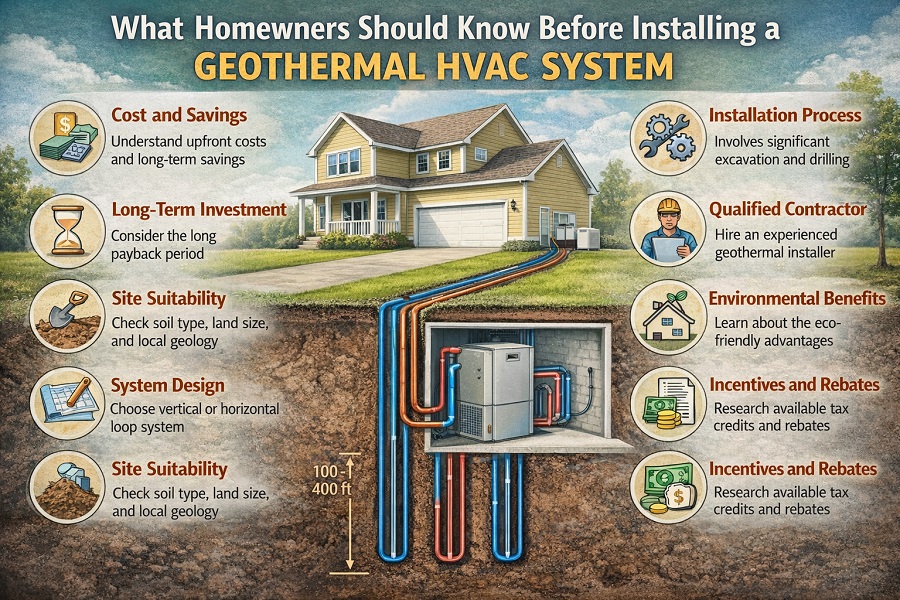
- A network of underground pipes, called a loop system, circulates fluid to manage this exchange
Because underground temperatures remain relatively constant year-round, geothermal systems operate more efficiently than standard furnaces or air conditioners.
Key Benefits of Geothermal Systems
Geothermal HVAC systems offer several advantages that make them appealing for long-term home improvement.
Energy Efficiency and Cost Savings
They use significantly less electricity than conventional systems. Over time, this can lead to noticeable savings on utility bills.
Consistent Indoor Comfort
Unlike traditional systems that cycle on and off, geothermal systems provide steady heating and cooling. This helps maintain even temperatures throughout your home.
Environmentally Friendly
Geothermal systems reduce greenhouse gas emissions and rely on renewable energy from the earth. This makes them a more sustainable choice for environmentally conscious homeowners.
After considering these benefits-energy efficiency, consistent comfort, and long-term savings-many homeowners explore options like geothermal HVAC services in Hillsboro, OH to better understand installation requirements and system suitability.
Installation Requirements and Considerations
Installing a geothermal system is more complex than replacing a standard HVAC unit. It requires planning, space, and proper site evaluation.
Property and Land Requirements
- Sufficient space for underground loops
- Soil conditions suitable for excavation or drilling
- Accessibility for installation equipment
Types of Loop Systems
- Horizontal loops: Installed in shallow trenches, ideal for larger properties
- Vertical loops: Drilled deep into the ground, suitable for smaller lots
- Pond loops: Used when a water body is available nearby
Each option has its own cost and installation method, depending on your property layout.
Upfront Costs vs Long-Term Value
One of the biggest concerns homeowners have is the initial investment. Geothermal systems typically cost more upfront than traditional HVAC systems.
Why the Initial Cost Is Higher
- Excavation or drilling for ground loops
- Specialized equipment and installation
- System design tailored to your property
Long-Term Financial Benefits
- Lower monthly energy bills
- Reduced maintenance costs
- Potential tax credits or incentives
Over time, many homeowners find that the savings offset the initial expense, making geothermal a worthwhile investment.
Maintenance and System Lifespan
Geothermal systems are known for their durability and low maintenance needs.
What Maintenance Looks Like
- Regular filter changes
- Periodic system inspections
- Checking loop system performance
Expected Lifespan
- Indoor components: 20-25 years
- Ground loop system: 50 years or more
Because most of the system is protected underground, it experiences less wear and tear compared to traditional outdoor units.
Is a Geothermal System Right for Your Home?
Not every home is an ideal candidate for geothermal HVAC. Several factors determine whether it’s the right fit.
Consider These Factors
- Available land or drilling access
- Budget for upfront installation
- Long-term plans for the property
- Local climate and energy costs
Homeowners who plan to stay in their property long-term often benefit the most, as they can fully realize the energy savings over time.
For those evaluating their options, learning more about geothermal HVAC services in Hillsboro, OH can help clarify site requirements, system design, and expected performance based on local conditions.
Common Misconceptions About Geothermal HVAC
Despite its growing popularity, geothermal technology is often misunderstood.
“It Only Works in Certain Climates”
Geothermal systems work in a wide range of climates because they rely on stable underground temperatures, not outdoor air conditions.
“It’s Too Complicated to Maintain”
In reality, geothermal systems require less maintenance than many traditional HVAC systems.
“It’s Only for New Homes”
While easier to install during construction, geothermal systems can also be retrofitted into existing homes with proper planning.
Understanding these points can help homeowners make a more informed decision.
Final Thoughts
Geothermal HVAC systems offer a reliable, energy-efficient way to heat and cool your home. While the upfront investment and installation process require careful consideration, the long-term benefits-lower energy costs, consistent comfort, and environmental sustainability-make them an attractive option for many homeowners.
By understanding how these systems work and evaluating your property’s suitability, you can decide whether geothermal is the right choice for your home. With proper planning and expert guidance, it can be a smart investment that pays off for decades.