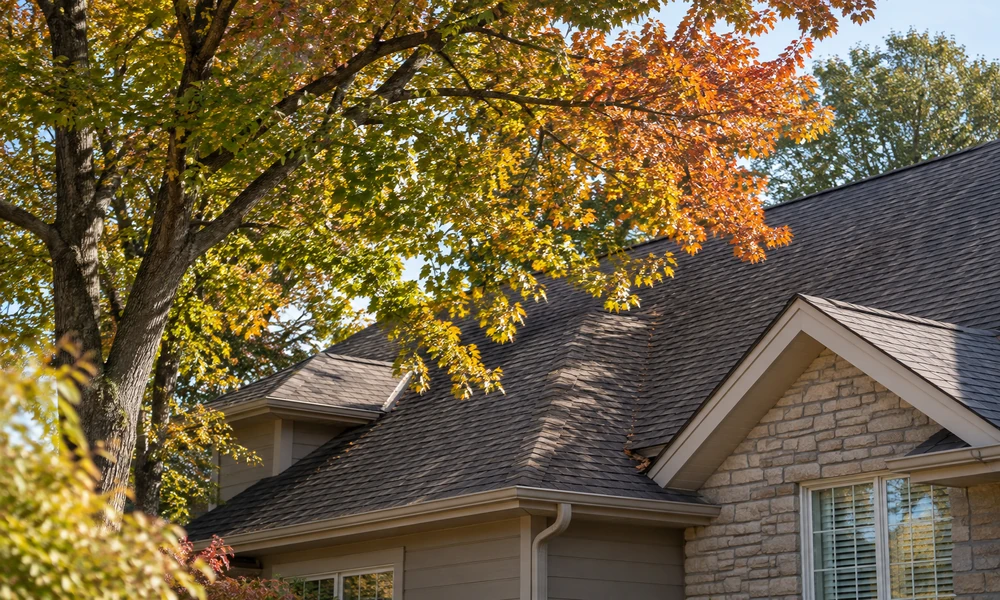
Houston is a city built under branches. The U.S. Forest Service counted roughly 33 million trees inside city limits, most of them growing on private lots, and anyone who has driven through Memorial, Spring Branch or The Woodlands knows how often those canopies hang directly over a roofline. After Hurricane Beryl, the Texas A&M Forest Service estimated that about half of the region’s urban trees took some kind of wind damage. A great many of them landed on houses.
Roofers across the area spent months afterward pulling limbs off shingles, and it’s a pattern any experienced Houston roofing company will recognize. The crews at greenlightroofing.com handle free damage inspections from Katy and Cypress out to Tomball and Conroe, work as GAF and CertainTeed certified installers, and lean on an owner whose earlier career was spent inside the insurance business. What they see over and over is that the dramatic fallen oak is only one of the ways a tree wears down a roof. Most of the damage builds up slowly, season after season, long before any storm arrives.
The tree in your yard is not the enemy. Shade cuts cooling costs in a climate where attics routinely pass 140 degrees, and mature trees add real value to a property. The goal is to understand exactly how a tree interacts with the surface below it, then manage that relationship before it gets expensive.
Reading the Tree From the Crown Down
Every part of an overhanging tree touches the roof in its own way. Looking at them in order, from the highest limbs to the lowest shadow, makes the risks easier to sort.
Heavy limbs overhead
This is the obvious threat and the costliest one. A large limb dropping during a thunderstorm can crack decking, snap rafters and open the house to rain within minutes. Houston’s soaked clay soils make it worse, because saturated ground loosens root plates just as the wind peaks. Limbs with deep cracks, hollow sections, fungus at the base or dead wood still clinging in summer deserve attention well before hurricane season.
Branch tips that scrape
Branches resting on or swaying across shingles act like sandpaper. Each gust drags them back and forth, scrubbing away the protective granules that shield the asphalt from UV light. The result looks like bald patches or dark streaks on one side of the roof, and those spots age years faster than the rest. Metal roofs suffer too, since constant rubbing scratches through the coating and invites rust at fasteners.
Leaves, needles and pollen
Live oaks shed heavily in spring, pines drop needles year round, and pecans scatter husks and twigs every fall. All of it collects in valleys, behind chimneys and along gutters. Wet debris holds moisture against the shingles, slows drainage and pushes water sideways under flashing during heavy downpours. Clogged gutters overflow toward fascia boards, which rot from the inside where nobody looks.
The shade itself
A roof that never dries is a roof that grows things. Houston’s humidity combined with heavy shade creates ideal conditions for algae streaks, lichen and moss, especially on north facing slopes. Moss is the real problem, because it lifts shingle edges as it grows and wicks water into the nail line.
A highway for wildlife
Overhanging branches give squirrels, rats and raccoons a direct path to the roof. Squirrels chew through soffit vents, ridge vents and pipe boots, and once inside the attic they tear up insulation and gnaw on wiring. Many attic infestations in Houston begin with a single branch touching the eaves.
How Houston’s Common Trees Behave
Species matters more than size. Live oaks are remarkably wind firm thanks to their low, spreading form, but their long horizontal limbs reach far over houses and can split at weak unions. Water oaks are a different story. They grow fast, decay from the inside and are known for failing in storms with little warning, which makes an older water oak near the house worth a professional look.
Loblolly pines, which dominate The Woodlands and Kingwood, tend to snap mid trunk in high wind rather than uproot, and their tall straight trunks can reach a roof from surprisingly far away. Pecans drop heavy limbs even on calm summer days, a habit arborists call sudden branch drop. Chinese tallow trees, an invasive species found across the metro area, have brittle wood that breaks easily under load.
A Sensible Plan for Trees Near the Roof
Managing trees around a house is mostly a matter of timing and distance. A practical approach looks like this.
- Keep branches at least six to ten feet away from the roof surface, and farther from chimneys where heat and sparks are a concern.
- Schedule pruning in late winter or early spring, before hurricane season begins in June, and avoid wounding oaks between February and July when oak wilt spreads most easily in Texas.
- Clean gutters and valleys at least twice a year, adding a cleaning after the heavy spring oak drop or more often under pines.
- Have a certified arborist evaluate any large tree within striking distance of the house every few years, since internal decay rarely shows from the ground.
- Ask for a roof inspection after significant pruning, when hidden scrape damage and debris buildup are finally visible.
Choosing the right person for tree work matters as much as the work itself. After major storms, crews with chainsaws go door to door, and homeowners can end up liable for injuries on their property. Texas A&M AgriLife Extension’s guide on what to do when your trees fail recommends verifying ISA certification, confirming insurance directly with the carrier and comparing several bids before signing anything.
When the Tree Has Already Come Down
If a limb or trunk lands on the house, stay off the roof and away from any downed power lines. Photograph the tree in place from several angles before anyone cuts it, because those images help establish what happened and how much damage it caused. Then arrange temporary protection such as a tarp to keep rain out, and save every receipt.
Most homeowners policies cover damage when a tree falls on a covered structure, though payment for removing the tree itself is often capped at a set amount per tree. A fallen tree that hits only the yard is usually your expense to clear. Once the tree is gone, the roof should be inspected from decking to ridge, since impact can crack rafters and loosen shingles well away from the visible hole.
Living Comfortably Under the Canopy
Trees and roofs can coexist for decades when someone pays attention to both. The houses that fare best in Houston are rarely the ones with no trees at all. They’re the ones where branches are kept back, gutters stay clear, and an old water oak gets checked before a storm instead of after one. A little distance between leaf and shingle buys years of extra life for the roof, and the shade overhead keeps doing its job for many summers to come.