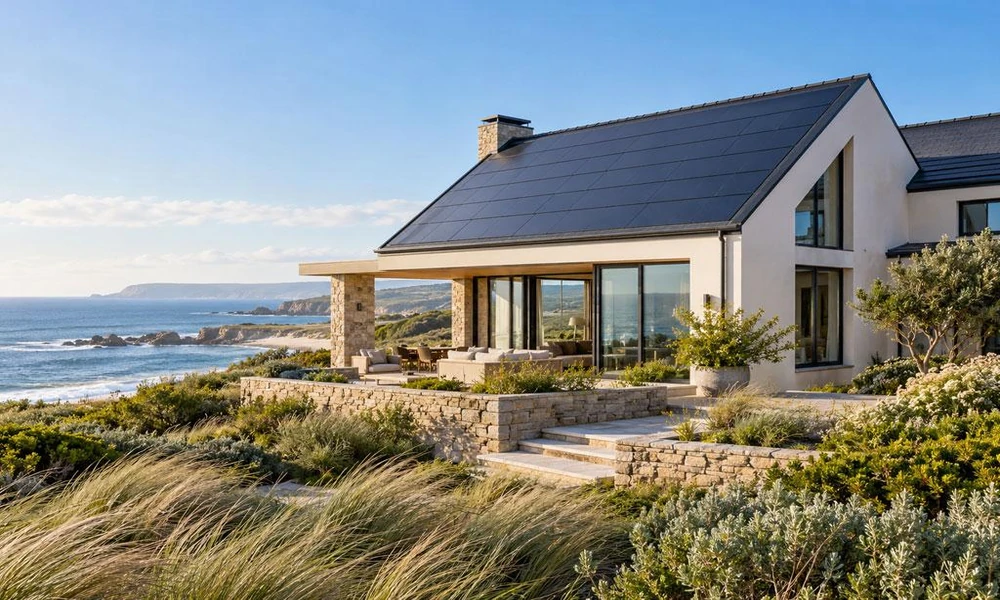
Coastal homeowners often choose exterior materials with their location firmly in mind. The same approach is useful when considering building-integrated photovoltaics. Before selecting a system, explain the property’s exposure to your suppliers and ask how the proposed construction has been assessed. A careful discussion of materials, installation and servicing can turn a broad claim about durability into information relevant to your home.
Start with a description of the site. Tell the designer whether the proposed installation faces open water, sits behind other buildings or occupies a sheltered part of the property. Share photographs and explain any known maintenance difficulties with existing exterior materials. Ask the supplier to state the environmental assumptions behind the recommendation so that everyone is assessing the same conditions.
Then review the complete assembly. Ask about the module construction, frame materials, fixings, connectors, joints and surrounding building interfaces. Request an explanation of how these components were selected to work together. For each critical item, ask who supplies it and where its specification is recorded. This creates a clearer basis for comparison than a proposal that describes the installation only as suitable for coastal use.
Surface coatings can form part of the material strategy. The WSD-3102 PV composite frame coating identifies as a water-based acrylic system for protecting photovoltaic composite frames. Its coastal application guidance emphasizes assessing the coating through environmental testing relevant to the project. For homeowners, the useful question is how the proposed frame and coating combination has been evaluated, including preparation, application and curing.
Ask for testing information in a form you can discuss with the project team. Find out which construction was tested, what conditions were used, and what the reported results demonstrate. If a supplier refers to salt-spray, damp-heat or ultraviolet-aging tests, request the relevant reports or summaries. Ask the designer to explain how this evidence supports the product’s intended location and use.
The coating specification should also be connected to manufacturing quality. Ask whether the proposed finish is factory applied, how the manufacturer checks it, and what happens if a coated surface is damaged during delivery or installation. Request the approved handling and repair procedures. These questions help establish responsibilities without requiring the homeowner to prescribe a coating formula or supervise an industrial finishing process.
Plan maintenance around the completed building. Ask how the installation will be inspected, which cleaning methods are approved, and how technicians will access individual elements. The IEA PVPS guidance on BIPV user needs notes that maintenance requirements depend on the integration method, building location and local climate. Request a written plan that reflects your installation rather than relying on generic care advice.
Finally, read the warranty with the supplier before signing. Ask whether the property’s coastal location affects coverage, which maintenance records should be kept, and who handles claims involving appearance, electrical operation or building weather protection. Request written answers and retain them with the specifications and installation drawings. At handover, photograph the completed surfaces and obtain the contact details for both routine servicing and the investigation of any future defect.