Every few weeks, somewhere in Chittenden County, a crew climbs onto a perfectly good solar array and starts unbolting it. The panels are fine. The shingles under them are worn out, and a new roof can’t go on until the array comes off. Installers call this a detach and reset, and the bill often runs into the thousands, on top of the reroof itself.
That situation comes from two clocks running at different speeds on the same roof. Asphalt shingles in this climate tend to last twenty to twenty-five years. Solar panels usually carry warranties of twenty-five to thirty years and often keep producing after that. Put a new array on a ten-year-old shingle roof and you’ve almost guaranteed that the array will have to come off at least once.
Steel changes that timing, and it’s a big reason so many homeowners now ask about panels and metal together. People looking into South Burlington standing seam metal roofing can speak with crews that are certified on Drexel and Englert metal systems, assign a project manager to each job and have spent more than two decades roofing homes across Vermont. That combination is worth having when two trades share a roof. A well-installed standing seam roof can last forty years or more, which means the first array may come and go while the roof stays put.
The Seam Is Already a Mounting Rail
On a shingle roof, solar racking is fastened through the roofing into the rafters. Every one of those lag bolts is a hole that depends on flashing and sealant to stay dry for decades. A typical residential array can have dozens of them.
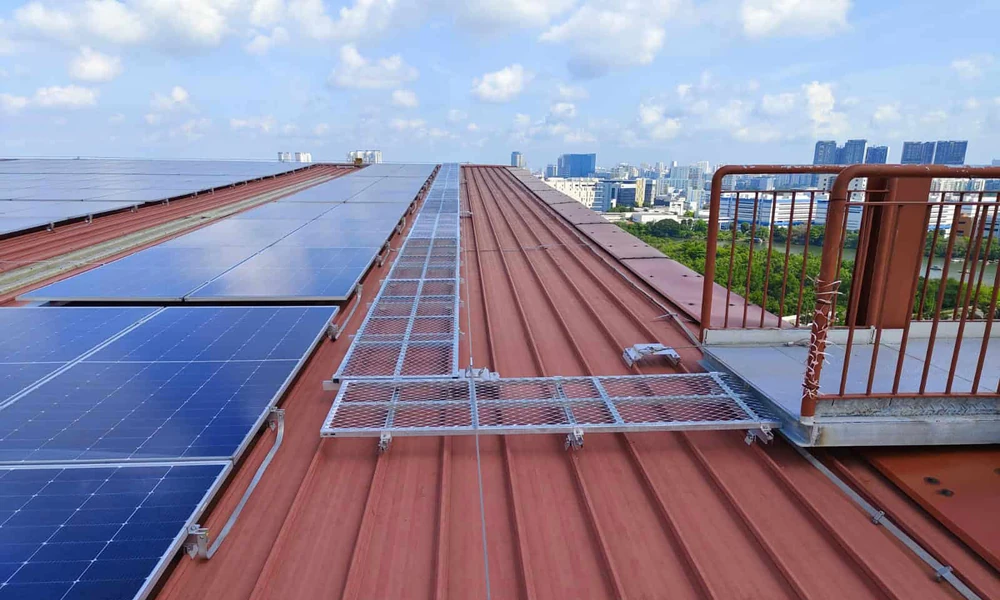
Standing seam works differently. Each panel joins its neighbor at a raised rib, and solar clamps grip that rib directly. Set screws press against the seam without piercing it, so the roof surface underneath the array has no holes at all. Rails or module brackets attach to the clamps, and the panels sit on top. There is no flashing to age and no sealant to dry out, and nothing is fastened down through the roof.
Clamp manufacturers test their hardware against specific seam shapes and publish which profiles each clamp fits. That’s why the profile chosen at the start matters so much later.
Not Every Seam Grips the Same Way
“Standing seam” covers several panel designs, and they don’t all behave alike under a clamp, a snow load or a strong wind off the lake. The three most common on homes are listed here.
- Mechanically seamed panels are crimped closed on the roof with a seaming tool, in a single or double fold. A double lock is the strongest option against wind uplift and heavy snow, and it gives clamps a very secure grip.
- Snap-lock panels click together by hand with no seaming tool. They go on faster and cost less, and they hold clamps well when the hardware is matched to the profile.
- Nail strip panels are screwed through a flange along one edge, and the next panel hides those screws. They’re the most economical, but they allow less room for expansion, so they’re usually limited to shorter runs like porches and sheds.
Seam height plays a role too. A taller rib, around an inch and a half to two inches, keeps the joint higher above melting snow and slush and gives a clamp more to hold.
Gauge, Coating and the Long Promise
The thickness of the steel is given as a gauge, and a lower number means heavier metal. Most residential standing seam uses 24 or 26 gauge. The heavier 24 gauge resists the waviness installers call oil canning and better handles foot traffic from a solar crew.
The protection is in the layers. Most quality panels start with a steel core coated in an aluminum and zinc alloy, then get a painted finish on top. PVDF finishes, often sold under the Kynar 500 name, resist chalking and fading much longer than cheaper polyester paints. Finish warranties on these systems often run thirty to forty years. That is the number to compare against the panel warranty when deciding whether the roof will outlast the array.
Snow Behaves Differently Under Glass and Steel
Glass and painted steel are both slick, and a Vermont winter makes that matter. Snow that slides off an array can take the snow on the metal below it with it, and the whole load comes off the eave at once. Above a front door, a deck stair or a driveway, that’s a real hazard.
The fix uses the same seams as the solar mounts. Snow guards and snow fence clamp onto the ribs without piercing the roof, usually placed below the array and over any spot where people walk or park. Placement should be planned with the solar layout, not added after the first February.
Metal also gets hotter in summer sun than shingles do, so the underlayment beneath it should be a high-temperature synthetic rated for metal. Older felt can soften and stick in that heat. Steel does help with ice dams, because meltwater runs off a smooth surface instead of creeping under shingle tabs. Attic insulation and air sealing still decide how much melting happens to begin with.
Planning the Roof Around the Array
Once a roof will host solar, the best layout decisions happen on paper before any metal is ordered. A few small details make a big difference.
Plumbing vents, bath fans and chimneys interrupt the long open runs that panels need. A good crew will consider rerouting or combining vent pipes away from the sunniest plane before the new roof goes on. Fire code setbacks along ridges and edges reduce how much of the roof can hold panels, so the roofer and solar designer should share drawings early. Wiring paths, conduit entry and grounding of the metal roof and racking all need agreement between both trades.
New construction in South Burlington adds another factor. The city requires new buildings to set aside part of the roof as a solar-ready zone. A standing seam roof suits that zone well, because it can stay unused for years and accept an array later without a single new hole.
Doing Both Jobs in One Season
The U.S. Department of Energy notes in its step-by-step guide for homeowners going solar that putting panels up at the same time as a roof replacement can often save money. In practice that means a coordinated handoff. The roofer finishes the steel, the solar crew follows within weeks, and both are working from the same plan.
Warranties are where people get caught. Ask the roofer which clamp brands and models it approves for its panels, and get that approval in writing. Some metal warranties exclude damage from attachments the roofer never signed off on. The solar contract should also say who is responsible if a seam is damaged during racking.
A Roof That Outlives Its First Array
The real difference comes years down the road. When the first panels are eventually retired, a shingle roof would be due for replacement again. A steel roof with properly clamped seams is usually still sound and can take a second, more efficient array on the same ribs. In a city that is steadily adding solar to its rooftops, a roof designed to last through more than one generation of panels is the sensible place to start.